In this video naturalist Dave Sapienza, from Lake Hope State Park, shows off a hummingbird’s nest and he will help you discover how the nest is made, where a nest can be found, and how a hummingbird uses it as a home.
Categories
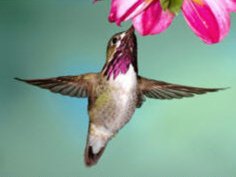 Hummingbirds For Mom
In this video naturalist Dave Sapienza, from Lake Hope State Park, shows off a hummingbird’s nest and he will help you discover how the nest is made, where a nest can be found, and how a hummingbird uses it as a home.
Many people are under the mistaken idea that their hummingbird feeders must be taken down on or around Labor Day, but this simply is not true. It is impossible to know how this incorrect information has become so widely believed but this post will hopefully help set the record straight on this issue.
It is important to understand that leaving your hummingbird feeder up will not stop the hummingbirds from migrating. A hummingbird’s body will signal when it is time for the bird to migrate due to changes in the length of the day or photoperiod. By leaving your hummingbird feeders up, for least two weeks or so since seeing your last hummingbird, you would be providing a vital food source for any birds that are late in migrating or those that can no longer survive the migratory journey due to illness or age or whatever the cause might be.
No matter where you live, it is impossible to provide an exact date by which hummingbird feeders should be taken down. This will very greatly due to where you live. As a general rule or guideline, it is not at all uncommon for many people leave their feeders up for at least two weeks after seeing a hummingbird. There are even places places in which people keep their hummingbird feeders up year round because not every single species of hummingbird migrates. Therefore, each of you will have to determine for yourselves when and if your hummingbird feeders should be taken down or not. Regardless of your decision concerning this matter, please know that doing so will not prevent the hummingbirds from migrating and also know that leaving your feeders up can actually serve to help the hummingbirds.
Have you ever wanted to know about anything about the construction of a hummingbird’s nest? If so, then this post is one which you will particularly enjoy reading. This post will help you discover who is responsible for nest construction, how long construction of the nesting site takes and what materials are used in the building of the nest.
It is the female hummingbird who is responsible for constructing the nesting site. The nest construction will be completed in less then a week, but during this time the female hummingbird will work about four hours per day on it and make approximately 100 trips back and forth while doing so.
The foundation of a hummingbird’s nest is made of spider webs because of the sticky nature of this material. The next layers of the nest consist of soft materials such as moss or leaf hairs. These layers help give the nest its shape and then a mold is made and then more spider webs are added. Now a layer of camouflage is brought in and this can consist of anything from seeds to small twigs.
When it comes to their efforts to camouflage their nest a hummingbird is very creative in nature. Here is how a hummingbird tries to camouflage its nest. The camouflage is darker on shaded parts of the nest and lighter where it is sunnier, walls are thicker on the windier side and, for added comfort, and the inside of the nest is shaped by the mother’s own body.
Has your hummingbird feeder been in the same exact location for a long time and you now find that you are having trouble with various insects at the feeder? One way to help with this issue is to relocate your feeder somewhere else. In this post you will discover why this will help the issue.
Insects as well as hummingbirds are creatures of habit and will likely visit the most convenient and reliable food source available. Insects are unlike hummingbirds because the insects are far less likely to search for a relocated food source. This is why the act of moving a feeder can decrease the number of insects visiting it.
The simple act of moving your feeder, even just a few feet, can help decrease the number of insects which visit your hummingbird feeder. In a very short time, maybe even a few minutes, hours or days, the hummingbirds will once again find your hummingbird feeder because these birds do not mind searching for a dependable food source and due to the bird’s excellent memory they will return again and again to the feeder that is responsible for it.
I am constantly astounded by the constant discoveries about hummingbirds that I continue to make. This post is the direct result of one such discovery and it will discuss the diet of a baby hummingbird. I hope that you will find it as interesting as I myself did while doing the research for this post.
When a baby hummingbird is first born it is unable to eat nectar as an adult hummingbird would do. The mother hummingbird will feed on bugs and nectar which will then be regurgitated in the form of a slurry substance on which the baby hummingbirds are feed approximately every 20 minutes.
The mother hummingbird will signal to the baby hummingbirds that it is time to eat by landing on the nest which causes the babies to feel the wind from the mother’s wings and thus open their mouth. Using her beak the mother hummingbird will place the food (the slurry substance) inside the baby hummingbird’s mouth with the use of an up-and-down pumping motion.
If a baby hummingbird were fed only normal nectar this would cause harm to the baby hummingbird. The baby hummingbird would likely be severely crippled or even die, due to the fact the normal nectar lacks enough protein.
A baby hummingbird will begin to fly at about the age of three weeks. At this time, the mother hummingbird will accompany the young birds for a few more days to show the young where the best sources of nectar and bugs can be located. It is after this that the young birds are then left to live on their own.
Even though I have a large knowledge base on the subject of hummingbirds, I never want to stop learning about these amazing birds. I know I enjoy making these kinds of discoveries and it is my hope that you all will as well. This type of topic especially makes me think of my mom and our shared love of these birds, because I know she would have enjoyed making these same discoveries right along with each of you.