Categories
Hummingbirds

Cuban Emerald Hummingbird

The name of the Cuban Emerald Hummingbird fascinates me and even brings to mind my mom who loved hummingbirds and  had various types of jewelery, including emeralds.  This particular hummingbird can be said to be one of the various jewels of the hummingbird word.  Here is some fascinating information about this species.

The Cuban Emerald Hummingbird lives in the woodlands and can be found in the Northern Bahamas, Cuba, and although quite rare it is even known to be a vagrant of southern Florida.

One thing that is unique about both sexes of the Cuban Emerald Hummingbird, both sexes are known to have a white spot behind their eyes.

Here is what you should look for if you are ever fortunate enough to spot a male or female Cuban Emerald Hummingbird.  The information is intended to assist you in your identification of the species.

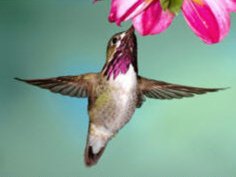
The male Cuban Emerald Hummingbird is green in color, which is probably obvious from its name, has a blackish colored tail and white under tailcoverts, the lower mandible is mostly pinkish in color and their tail is forked.

The female Cuban Emerald Hummingbird is said to be green to bronze-green above and dusty violet on the tail.

My mom love things of beauty and brilliance, so I am certain that she would have appreciated the Cuban Emerald Hummingbird as a true jewel of nature.  While it is extremely unlikely that she would have ever had the opportunity to view one firsthand, I feel certain she would have loved discovering about this hummingbird species and I hope that you will also.

Categories
Hummingbirds

Weather Dangers to Hummingbirds

There are many dangers that a hummingbird can face, including one that you might you might not even consider, that is a factor each and every day. Do you have any idea what that might be? It is the weather and this post will explain how the weather can be a real source of danger to a hummingbird.

A heavy freeze can kill a hummingbird. This can cause the hummingbird’s body temperature to drop too low and the bird will not awaken from a state known as torpor, the hibernation like state that the bird will enter each evening to try and ensure its survival through the night. Extreme heat or drought can also result in the death of a hummingbird due to dehydration. Heavy rains occurring while a hummingbird is flying across the Gulf of Mexico have been known to be the cause of the hummingbird being pushed into the water and drowning because of it. Wind can be quite a strong and destructive force which can cause great harm to a hummingbird. It can cause the birds to be blown into things like thistles and thorns.

A hummingbird must face many challenges in its efforts to survive, but the weather is certainly a big challenge that has a huge impact on the hummingbird’s daily struggle to survive. This fight for survival is made even greater by the vastly changing nature of the weather from day to day.

Categories
Hummingbirds

Not All Hummingbird Nest Located at High Altitudes

Most hummingbird nest are found to be located at higher altitudes. Have you ever wondered why this occurs? Is this true of all species of hummingbirds? If these are questions that you have wanted answered about hummingbirds, this post will provide you with the information you seek.

Most hummingbird nesting sites are built at higher altitudes to protect the embryos. The location which is selected must maintain a temperature that is below 96 degrees F. to help ensure that the embryos do not become fried due to over exposure to extreme high temperatures.

The Ruby-throated Hummingbird is one species of hummingbird that does not absolutely have to have their nesting site located at a higher altitude. There may be other hummingbird species that this is also true of as well, but the reference source I consulted only mentioned the Ruby-throated Hummingbird specifically. The Ruby-throated Hummingbird has learned how to “beat the heat.” This hummingbird will build their nest among a canopy of broadleaf trees and the temperature there averages six degrees cooler and this protects their embryos from the threat of being fried.

Categories
Hummingbird Food Hummingbirds

The Hummingbird’s Appatite

If you have observed hummingbirds for very long, you may think that hummingbirds eat constantly. This simply is not true. Here is an explanation of the feeding habits of the hummingbird.

Hummingbirds do eat quite frequently but not constantly, due to the fact that the hummingbird possesses an extremely high metabolic rate. It is this rapid metabolic rate that allows the hummingbird to digest nectar very rapidly and efficiently, and thus enables the nectar to pass entirely through the hummingbird’s digestive system in less than 20 minutes! The activity level of the hummingbird requires that they continually refuel or they would not be able do all that they do.

A hummingbird will feed between 6-8 times per hour with each feeding only lasting about 30 seconds in length. Which is why during daylight hours, the hummingbird will eat frequently for short periods of time and thus it may appear as though they are eating constantly.

At night, the hummingbird will eat as heavily as the nectar supply will allow to ensure that it will survive its overnight fast while maintaining its normal resting metabolic rate. To accomplish this, the hummingbird may store a third of its weight in nectar.

Hummingbirds must eat properly to ensure their very survival, so now maybe you understand more about their need to eat as they do.

Categories
Hummingbird Food Hummingbirds

Not Just Red Plants Attract Hummingbirds

Red is a color that is well known to attract the hummingbirds, but it is far from the only color you can use to entice the hummingbirds to your yard. A wide variety of other colors including pink, purple, orange, yellow, white and others will also do so quite nicely. This post will explain why color choice is not the most important consideration when selecting plants that will entice the hummingbirds to visit your yard.

The plants or flowers you select should have a long season of overlapping bloom. This includes plants such as petunias, annual red salvia, autumn sage and shrimp plants, or the firebush.

It is extremely important to select a wide variety of plants which are known to attract hummingbirds. You will want the flowers you choose to bloom different times so there will always be something flowering.

Did you know that the flowers you choose will serve two very important purposes? Well, they will. They will provide a source of nectar for the hummingbirds, and they will also attract insects on which the birds will feed.

The colors of the flowers or plants you select are not what is of the greatest importance to a hummingbird when it comes to selecting a food source. So, what is the most important consideration to a hummingbird? To a hummingbird what is far more important when choosing a food source is the quantity and quality of the nectar which is available. As a result, the hummingbird will select the flower with the highest nectar output and the richest concentration of sugars, regardless of the shape or color of the flower. The taste of the nectar is also far more important then the color of the flower.

When choosing flowers and plants to attract hummingbirds, red is not the only color to use. Choose flowers or plants in a wide variety of colors and you will not only have a beautiful and brightly colored yard but you will provide a wonderful food source for the hummingbirds.