Named for Royalty

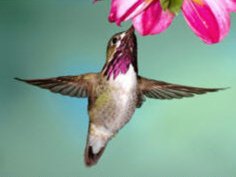
Today’s post is of a fun or somewhat less serious nature, but I hope you will still find it informative. Did you know that some hummingbird species have been named after royalty? Well, it is true. Here are a few examples.                                                                                             

The Anna’s Hummingbird was named for a 19th-century duchess, Anna Massena.

The Magnificent Hummingbird was formally known As Rivoli’s Hummingbird. This bird was named after M. Massena, the Duke of Rivoli, in 1829 by French naturalist, Rene P. Lesson, because of its royal appearance.    
 
There may be others, but these are the ones that I know of currently. If you know of any others please feel free to share that information with us. Then we can all share in the additional knowledge. 

Abandoned Hummingbird or Not?

Have you ever seen a young hummingbird alone in the nest and worried that it was abandoned by its mother? If so, you are not alone. How do you determine if this has occurred or not? Let me explain.
 
You should observe the nest for quite sometime continuously, at least an hour or so maybe more, to determine if the mother hummingbird is indeed returning to the nest or not. 
 
As a general rule, if the young look healthy then the mother is taking good care of them. It is important to remember that the feedings can happen very quickly and, depending on the stage of development of the young, sometimes occur infrequently.
 
It is extremely rare for the mother hummingbird to abandon her young, but sadly this does sometimes happen.  Please never assume that abandonment has occurred. Let the information above be of help to you whenever you are unsure and trying to make a decision about the matter.
Categories
Dear Mom

Merry Christmas

Christmas 2008 is upon us and I want to wish each of you a very Merry Christmas.  Wherever and however you choose to spend the day, I sincerely hope that each of you are fortunate enough to be surrounded by those that you love the most.  That has to be is one of life’s greatest gifts and it is one I don’t want to ever take for granted, as life is far too short.

To all of you who read this blog, I want to say thank you very much.  I hope that you enjoy the information found here and that you will continue to do so in the future.  Let me know if you have a topic that you would like covered or if you have any other comment. 

Merry Christmas to one and all!  Until next time…

Categories
Hummingbird Food

Nectar: To Boil or Not to Boil?

People often wonder if nectar solution should be boiled or not.    This is a question that I have been asked over and over and therefore I will now address the issue in this post. There seems to be many differing opinions on this matter, but I personally believe that it is best boil hummingbird nectar solution. Let me explain why.
 
By boiling the nectar solution, the chlorine that exists in the water will be driven out and this will also kill mold and yeast spores that might exist in the nectar solution. Doing so will help ensure that the nectar solution will last longer both in the feeder and in your refrigerator. 
 
Boling the nectar solution also helps kill bacteria that would be harmful to the hummingbirds. 
 
Boiling the solution helps to ensure that the sugar is completely dissolved. Once this occurs, let the nectar solution cool completely before filling your feeders. 
 
A word of caution about boiling nectar solution, you must remember to not boil nectar solution for too long, because by doing that ratio of the mixture (the amount of water to the amount of sugar used) will change as it is boiled off.
 
I sincerely hope that this hopes everyone make a more informed decision on this matter. The benefits would seem to far outweigh the time it takes to do so. Why not air on the side of caution in this matter, rather then risk causing any harm to the hummingbirds?
Categories
Dear Mom Hummingbird Food

Vines that Attract Hummingbirds

I don’t like winter at all. I can’t stand to be cold whatsoever. In my ideal world, at least in my opinion, the temperature should always remain between 70-80 degrees year round. Also, regardless of where you live, there would be hummingbirds around throughout the year, no matter the season. In southeast Texas there are no hummingbirds in the winter.
 
Can you tell how much I miss them? Well, I certainly do for so many reasons. Hummingbirds are such beautiful and fascinating creatures, when they are here the weather is normally sunny, and mostly because these birds remind me so much of my mom whom I miss so very much.
 
So dear readers please try and understand why I have written so many posts recently on how to attract hummingbirds. In doing so I am reminding myself that warmer weather and these amazing birds will soon be back with us. Yea! It is also my way of connecting with my mom during this holiday season. 
 
Blow is a list of some vines that will attract hummingbirds. Please, consider planting any of the in your hard, because both you and the birds will be glad you did so.
 
Coral Honeysuckle
Crossvine
Trumpet vine 
Gold Flame Honeysuckle: This is an early bloomer, as it begins about the same time that the hummingbirds show up, and it will continue until after they leave.  As an added bonus, it smells terrific.
 
Christmas is almost here mom and that makes me miss you even more then usual. It comforts me to care your memory with me and I believe that you are somehow aware of all that I am doing about hummingbirds. You are in Heaven now but your memory is also alive and well in my heart. Merry Christmas to one and all!  Here’s to looking forward to warmer weather and the return of the hummingbirds…it can’t come too soon for me.