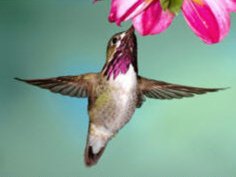
This video explains how to use hummingbird feeders to help attract hummingbirds to your yard, and why it is necessary to use trumpet shaped flowers along with your feeders to draw the hummingbirds to your yard.
Category: Hummingbird Feeders
Hummingbirds prefer to feed from flowers that are in bloom and attract them rather then from feeders whenever possible. This is not to say that hummingbirds will not feed from your feeders because they will, but if given the choice of the natural nectar that flowers produce and homemade nectar solution, the birds will choose the natural nectar while it is most plentiful and readily available. The natural nectar that is found in the flowers is sweeter then homemade nectar solution and hummingbirds like the nectar to be extremely sweet.
Does this mean that you should not put out hummingbird feeders? Absolutely not. All I am not saying is that there will not be as as many hummingbirds at your feeders while the natural nectar supply is plentiful. The hummingbirds will once again begin to frequent your feeders as the various blooms in your yard begin to decrease and the natural nectar supply is not as plentiful as it was previously. Homemade nectar solution is very similar to that of natural nectar which is why the hummingbirds like it so well when the natural nectar supply is no longer plentiful.
Categories
The Pesky Problem of Ants
Every hummingbird season people have trouble with ants getting into their feeders. This issue can be quite frustrating and may even discourage you from using feeders in your yard. This post will offer some possible solutions to this bothersome dilemma.
The best thing to do to prevent the problem of ants is to block their passage to the feeder. This can be done through the use of a device known as an “ant moat.” It is a plastic cup like device that fits tightly around the hanging wire of the feeder which is then filled with water which will then block the path of the ants to the feeder. There are some hummingbird feeders on the market today that come with “ant moats” but with other feeders you will have to purchase the “ant moat” separately.
Another way to try and keep ants out of the feeder is to use a drip less feeder. Saucer type feeders are designed in such a way that makes them far less likely to drip. After all, you know it is the sugary substance that attracts the ants, so if the feeder is not dripping the ants will be less likely to know the nectar solution is even available.
The next suggestion I have to help try and prevent ants may sound a bit unusual, but several people I know have told me that it works quite well. All you do is to sprinkle some ginger around your feeder pole and then the ants will not go near the area. Why not give this unusual suggestion a try? After all, what have you got to loose by doing so?
You can also prevent ants and other insects from drinking all the nectar in your hummingbird feeder by hanging your feeder using a piece of clear nylon sewing thread. The tread is very fine and slippery, thus preventing the ants or other insects from climbing it and reaching the nectar.
It is my sincere hope that these suggestions will successfully help you solve the problem of ants in your hummingbird feeder. If you have any additional suggestions, please feel free to let us know. Any comments, advice or questions are always welcome.
Now that it is officially considered to be spring, at least according to the calender, you would not believe how many times in the past few weeks I have been asked “is it time to put out our hummingbird feeders yet?” Even though it is indeed spring, it has not felt much like spring here in southeast Texas. Regardless, of what the current temperature outside may actually feel like, it is now spring so that is why today’s post will discuss when it is time to put out your hummingbird feeders.
It is impossible to offer you an exact date on which you should put up your hummingbird feeders. While this may sound quite obvious, your feeders should be put up in time for their arrival. Which means that the date on which your feeders should be put up will vary greatly depending upon where you are located.
You will want to know the average date the hummingbirds tend to arrive in your specific area, because you will want to get your feeder up 5-10 days prior to the average date of their arrival in your area. If you are new to birdwatching or you just do not know when that usually occurs, I would suggest that you consult with other birdwatching enthusiast you may know or even your local Audubon Society.
Where I live, in southeast Texas, the first hummingbirds usually arrive around the last week in March and the middle of April. As a result, my mom would often hang her feeders around the time of her birthday, March 30. She did so as away of helping her remember when to do so. While everyone’s situation is unique, it is often good to have something that will help us remember when it is that we want to hang our hummingbird feeders.
You may be wondering why it is important to get your feeders up prior to the average date of the hummingbird’s arrival? Doing this will help increase the possibility that the hummingbird will spot your feeder up and stop by for a drink and therefore begin to realize that your backyard is a great hummingbird haven and thereby entice the birds to possibly stay for the season in your backyard!
Depending on where you live, it will likely soon be time for the arrival of the hummingbirds if they have not already begun arriving already. Regardless of what the calender marks as the official arrival of spring, it is not officially spring for me until I have seen my first hummingbird of the season. My fellow hummingbird enthusiast, don’t you also find that to be true?
With that in mind, it is time to start thinking about getting out your hummingbird feeders and begin preparing them for the arrival of the hummingbirds. That is why today’s post will remind everyone of the importance of proper hummingbird feeder maintenance.
If your feeders are made of plastic and have experienced a great deal of exposure to the sun or if there are missing or broken parts, you may wish to consider replacing them with new ones. This will help ensure that the feeder is far less likely to leak or that you might have a problem with bees getting to the nectar solution due to any missing “bee guards.”
Even though it may seem extremely obvious, I feel that it is worth repeating to remind everyone that hummingbird nectar solution is extremely susceptible to fermentation, mold, or harmful bacteria. All of these things can put the health and lives of the hummingbirds in danger, and this is something that should be avoided.
Due to the risk of fermentation, mold and bacteria your hummingbird feeders should be cleaned very often. Just how often? In extremely hot temperatures, every two to three days. If you have any doubt that the solution is still good, it should then be changed as a safety measure.
What is considered to be very hot weather? That would be when the temperature reaches above 60 degrees F., feeders should be cleaned every two to three days and then fresh sugar solution should be added.
To clean the feeder, you can do the following: wash the feeder in very hot water, to wish you may add some vinegar or even a tiny amount of Clorox. These things will help remove mold and kill bacteria. Please be sure and rinse the feeder out thoroughly when you are finished! Any hard to reach places on the hummingbird feeder can be cleaned with the aid of a bottle brush or pipe cleaners. It is also fine to place your hummingbird feeders in the dishwasher and let them run through its cleaning cycle.
It is impossible to state a specific date by which hummingbird feeders should be up. That will vary greatly depending on where you live. When you should hang up your feeders will also depend largely on which hummingbird species are common where you live.
With arrival of spring, we hummingbird enthusiast eagerly anticipate the arrival of the hummingbirds. Let’s get ready for them by being reminded of the utmost importance of proper hummingbird feeder maintenance. After all, none of us wants to cause harm to the birds that we so admire and enjoy.
–