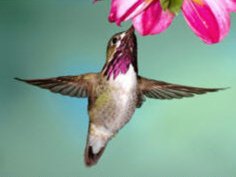
This video consist of a series of still phographs of the Ruby Throated Hummingbird. The photos are truly beautiful and give the individual the opportunity to view this species of hummingbird very closely. This video shows some Ruby Throated hummingsbirds in the Black Hammock, Oviedo, FL, that show up from early spring to late summer. Hope you enjoy the amazing photos in this video.
Author: Hummingbird
Have you ever before wondered just how long does it takes a hummingbird to digest nectar? This is the type of intersting fact about hummingbirds that my mom would have wanted to know an answer for and she would have sent me in search of it for her. Well, mom or anyone else reading this, there is no need to worry, because I have the suprising answer for you.
The hummingbird can digest nectar very rapidly and efficiently. The nectar will pass entirely through the hummingbird’s digestive system in less than 20 minutes! The speed at which this occurs came as a suprise to me. What about you?
Some of the hummingbird’s feathers actually change color as they move into the light. Only male hummingbirds have the brilliant iridescent throat feathers. Sometimes the name of a species of hummingbird can describe the beautiful and fancy feathers.
The brilliant iridescent throat feathers on the male hummingbird serve two very important functions: attracting a female and defending their territory. They use these to display to one another. Females find it attractive, and other males are repelled. Male hummingbirds are extremely feisty and territorial and these feathers are part of their territorial display.
It may surprise you to lean, as it did me, that in the mid-1800’s hundreds of thousands of hummingbirds were killed for their feathers which brought many species to the brink of extinction. Luckily, this did not happen. I myself am very thankful for this because, in my opinion, the world would be a far less beautiful place without the extraordinary and beautiful hummingbird in it.
If you are a hummingbird enthusiast, you will know that they love brightly colored flowers. These vary from area to area but Salvia, Buddleia, Nicotiana and Callistemon (Bottle Brush) are universally popular.
The next option, thriving between zones 2-9, is Delphiniums. They can grow up to five feet tall, so they are best used near the back of the garden or close to the house. These flowers come in a variety of colors.
You should plant a garden with a long season of overlapping bloom, including plants such as the petunia, annual red salvia, autumn sage and shrimp plants, or the firebush.
You should plant flowers and plants which are native to your area of the country. You can find out information concerning the specific plants that grown in your area and attract hummingbirds by talking with someone from a plant nursery that is located where you live.
Hummingbirds have long curved beaks, designed to suck nectar from plants with bell shaped flowers. The hummingbird will feed between 5-8 times per hour or approximately every ten minutes. Each feeding only last about 30 seconds in length. They also eat small insects and pollen for protein.
Flowers are a great way to attract hummingbirds to any garden. The specific flowers listed here are just suggestions and will very greatly depending on the area where you live. If you want to know specific suggestions as to what you can plant to attract hummingbirds in your area, please talk with someone from your local plant nursery who can answer any questions you may have on this matter.
One of the most frequent myths about hummingbirds is that they migrate by riding on the backs of geese. I have always found it difficult to believe that anyone would actually believe this myth, but believe me they do. You would not believe how often I have been asked about this. This myth is simply not true! Let’s examine the migration of hummingbirds and geese. Except for a few birds in a small area of the country, there is virtually no overlap in the migration pattern and timing of geese and hummingbirds. Most hummingbirds are long gone before the first geese come out of the Arctic.
Generally speaking, hummingbirds and geese have very different habitats. Hummingbirds tend to live in wooded and steamy-areas that are rich in flowers. Geese stay on ponds, lakes, and rivers and forage for their food in water, on grain fields, and on lawns.
Hummingbirds are extremely aggressive and teratorial birds so it is highly unlikely that they would tolorate a close association with other birds. Usually, a hummingbird will attack or chase away another bird if they try to get too close to the hummingbird. Also, it is extremely unlikely that a geese would tolorate any other bird on its back.