Categories
Hummingbirds

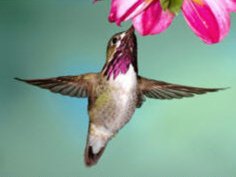
White-Eared Hummingbird

Here’s some information on the White-eared Hummingbird.  The information found here is not mine and comes from Hummingbirds.Net.  Since I did not write the information myself, I wish to give proper credit to the source from which the information came.

  • These hummingbirds are found in high tropical mountains and they rarely breeding the U.S.
  • With this species of hummingbird the male weighs slightly more then the female; on average the male will weigh 3.6 grams to the females weight of 3.2 grams.
  • This species of hummingbird winters in the mountains of Mexico.
  • The white-eared hummingbird has been observed in the following states: Arizona, Michigan, Mississippi, New Mexico and Texas.
Categories
Hummingbird Food

What is Traplining?

I recently came across a term relating to hummingbird feeding that I had not heard before, so I thought I’d share it with you as well.  The term is called traplining, which is when hummingbirds feed by sight on regularly followed routes.  I knew that hummingbirds had no known sense of smell and were therefore dependent on their sight to locate their food but I didn’t realize that they followed a set route.  Isn’t that amazing?  It appears that hummingbirds are quite the little creatures of habit, because they follow a set route when looking for their food and they even follow the exact same migratory path each time.


Categories
Hummingbird Food

Do Hummingbirds Eat More at Night?

I was recently asked if hummingbirds eat more at night.  The person who asked me said that this was something they had been wondering about hummingbirds.  This is what has inspired me to write this post, so I hope you will also find the information enjoyable and enlightening.

Yes, in fact hummingbirds do eat more at night.  During the nighttime hours a hummingbird’s eating is all about survival and making it though the night.  As a result, the hummingbird will eat as heavily as the nectar supply will allow in an effort to help it maintain its resting metabolic rate.  In order to maintain that rate the hummingbird may store up to 1/3 of its body weight in nectar.  This is the hummingbird’s way of striving to ensure that it won’t starve to death before dawn, which can happen in as little as two hours.

During the daytime, the hummingbirds will eat frequently for short periods of time, but this feeding isn’t as vital to their survival.

Categories
Hummingbird Feeders

Why Feeder Placement Matters

  • You will either want to position your feeders extremely close to the window or at least five feet away from the window.  Placing the feeder so close to the window makes it much easier for you to view the hummingbirds as they feed.  Placing the feeder at least five feet away from the window will decease the likelihood that the hummingbird will fly into the window while feeding.
  • The feeder should be placed in an area that is out of the wind and direct sunlight, because this will decrease the amount of nectar that will be spilled from the feeder and it help keep the nectar from fermenting as rapidly.
  • In an effort to help the hummingbirds find your feeders, place the feeders near flowers that are known to attract hummingbirds.  You are then offering the hummingbirds two sources of nectar from which to choose, thus enhancing the likelihood that the hummingbirds will remain frequent visitors to your yard. 
Categories
Hummingbird Videos

Hummingbird Banding 1/2

If you have ever wanted to know about the suject of hummingbird banding then this video is intended for you.  There are two videos on the subject of hummingbird banding done by the creator of this video,  In this video you will discover how the birds are caught so they can be banded, what type of anformation the banders want to gather and more.