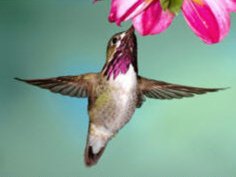
Many things can spark rememberances of those we have loved and lost. It can be caused by things such as the date, sights, sounds, smells and much more. When it comes to my mom many things can cause me to remember her such as the smell of her favorite perfume, her cooking of cetain foods (Mexican food, cornbread dressing, homemade rolls and more) or the sight of a hummingbird all cause me to especially think of my mom.
Today date has had me thinking of both my parents a great deal. You see, today would have marked my parents’ 55 wedding anniversary, but my mom passed away almost 3 three years ago. My thoughts have been with my dad because of how much I’m sure he is missing her and wishing they could have reached this milestone in their lives, Mom has not only been on my mind because of the significance of this date but also because of something I read concerning hummingbird nectar. I’m sure mom would have found it to be quite interesting.
According to the Wild Bird Habitat Store commercially made hummingbird nectar is supposed to last longer. It is supposed to only needed to be changed every four or five days. Homemade hummingbird nectar is said to be needed to be changed every two days. The reason for this I do not know, because no explanation for this statement was given.
This is something that I know you would debate strongly with people. After all, the yard was always full of hummingbirds feeding at your feeders and you always used homemade nectar in your feeders. You always used a mixture of 1 part sugar to 4 parts water to make the nectar. Then you would dissolve the sugar completely, let the mixture cool completely and then once again fill and hang the feeders.
You always made sure to clean the feeders regularly, usually when the feeder was empty, but you would do so whenever it was necessary. You always made sure that the nectar solution in the feeder was not cloudy looking and that there was no black mold in it. You always made sure to clean your feeders with a solution of bleach and water or even by placing the feeders in the dishwasher and then running it.
You believed in making your own hummingbird nectar for several reasons. It was simple to do and it was inexpensive to do compared to purchasing commercially made hummingbird nectar. You believed that the nectar solution was an alternate food source for the hummingbirds besides the numerous flowers you had planted in the yard to entice the hummingbirds.
Hummingbirds are creatures of habit and as a result they will visit the same flowers and feeders year after year. Hummingbirds know when they can trust a food source and when they can’t and you will have a hard time enticing the birds back if they have had a bad experience with the food source in your feeders.
When it comes to selecting a food source, what is most important is the quantity and quality of the nectar which is available. Whenever choosing a flower, the hummingbird will select the flower with the highest nectar output and the richest concentration of sugars, regardless of the shape or color of the flower. Also more important than the color of the flower is how the nectar taste.
Also, you knew that most commercially produced hummingbird nectar mixes contained red dye in them and that this was not necessary to help you attract the hummingbirds. Even though you weren’t aware of this, red dye is not necceary in nectar solution and has been proven to be harmful to the birds. Most feeders on the market today have red on them or you can add a red ribbon to the feeder to draw the attention of the hummingbirds.
So, while there are those who state that commercially produced nectar does not have to be changed as frequently, I myself would not choose to use it and I’m sure that you would feel the same way mom. Regardless of whether you choose to use homemade or commercially produced nectar solution in your fedders, it is importaant to remember to change it as often as is necessary, After all, no one wants to intentionally harm the hummingbirds, and I know that that was something that you certainly never wanted to do yourself mom.
I miss you so much and wish you were still with us mom. I want you to know that I feel extremely blessed to have had parents who were married for 52 years. INot many people these days can say that, but I can and do with great pride and love. I also which I could share my knowledge of hummingbirds with you as being able to debate issues concerning hummingbirds with you. What lively and interesting conversations that would have been! Well, sice I can’t do so, I jwill ust have to let other offer their opinion on the subject of homemade vs. commercial nectar.
Those of you who have hummingbird feeders in you yard, what is your opinion on this natter? Please let me know what you think.