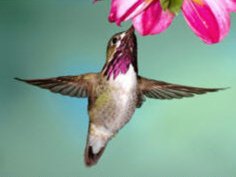
Are you someone whom is aware of the fact that hummingbirds migrate but after that you do not know anything about the migration habits of these birds? Well, then you are not alone and today’s post will provide you with some useful facts regarding hummingbird migration habits.
Many hummingbird species are known to migrate twice a year, in the spring and in the fall. It may surprise you to know that not every species of hummingbird migrates. During any hummingbird season you may see an occasional hummingbird remain around well after the others have left the area. This is usually due to the bird being unable to survive the migratory journey and the best thing you can do is leave your feeders up to help provide these birds with a source of food. The flowers and plants that also help feed the hummingbirds may no longer be blooming so this makes your feeder an even more vital food source.
Prior to making the long migratory journey, it is necessary for the hummingbird to gain a vast amount of body weight, between 25-40 percent of its body weight. This is vital to the bird’s survival while making the long migratory journey.
Different hummingbird species will take a different migration path. Hummingbirds choose to make this journey alone rather then in groups. Doing this means that the available food source does not have to be shared.
A hummingbird will follow the exact same route year after year. The route that will always be followed is the same exact route that was taken the first time the bird made a migration journey. As a result, it is possible for the hummingbird to return to the same exact flower or food source that it visited in the past. This astounds me! What about you? After all, how is it possible for the hummingbird to remember the exact flower or food source it has visited in the past, especially given that a hummingbird will visit between 1.000-2,000 flowers per day!
I hope that you have enjoyed discovering a little bit about the amazing migratory journey of the hummingbird. If you are like me, this is just yet another of the many things you admire about the hummingbird.
2 replies on “Hummingbird Migration Information”
May I quote some of the information here in this entry if I reference you with a link back to your site?
Yes, you may quote the the information in the post, but please put a link back to the site. Thanks.